

Insights on AI, Agents & Automation
Practical thinking on AI engineering, automation strategy, and what it actually takes to ship AI systems that work.

What are AI guardrails?
AI guardrails are external controls that sit around an AI model and check its inputs, outputs, and tool calls while it runs. They reduce risk without removing it. This guide explains how they work at each checkpoint, what they cost in compute and delay, which tools exist, and where independent testing shows they fail. As

What is AI agent memory?
AI agent memory is the system that saves, organizes and retrieves information across sessions, so a stateless model can act on what it learned earlier. This guide explains how it works, the main memory types, what it costs to run, and where it fails. As of November 2026, Anthropic’s file-based memory tool is generally available,
GPT-6.2 Astra vs Gemini 4 Carbon: Benchmarks, Pricing and Which Is Better
GPT-6.2 Astra is the better default for most teams: it leads four of five shared benchmarks, usually at a lower cost per task. Gemini 4 Carbon takes business workflow automation and has the cheaper token price. Close call, though. As of November 17, 2026, the only GPT-6.2 Astra vs Gemini 4 Carbon head-to-head comes from
GPT-6.2 Astra vs Claude Fable 5.2: Benchmarks, Pricing and Which Is Better
GPT-6.2 Astra is the better default for most agent workloads, and Claude Fable 5.2 is still the stronger coder. That's GPT-6.2 Astra vs Claude Fable 5.2 as of November 17, 2026, the day Astra launched. On the nine head-to-head charts OpenAI published on its own page, Astra posts the higher best score on six and

GPT-6.2 Astra and Sol Launch: Benchmarks, Pricing and Everything You Need to Know
GPT-6.2 Astra and Sol are OpenAI's new frontier and everyday models, launched November 17, 2026 at $8/$40 and $2/$10 per million input/output tokens. Astra tops OpenAI's agentic, science and legal charts, while Claude Fable 5.2 still leads on coding and the Artificial Analysis Intelligence Index at 2.4 to 6.6 times the cost per task. Below:

What Is a Data Pipeline?
A data pipeline is an automated set of steps that moves data from its sources to a destination, often cleaning or reshaping it in transit. This guide covers how the stages fit together, how pipelines differ from ETL and ELT, which data pipeline tools do which job, what drives the cost, and why pipelines fail.
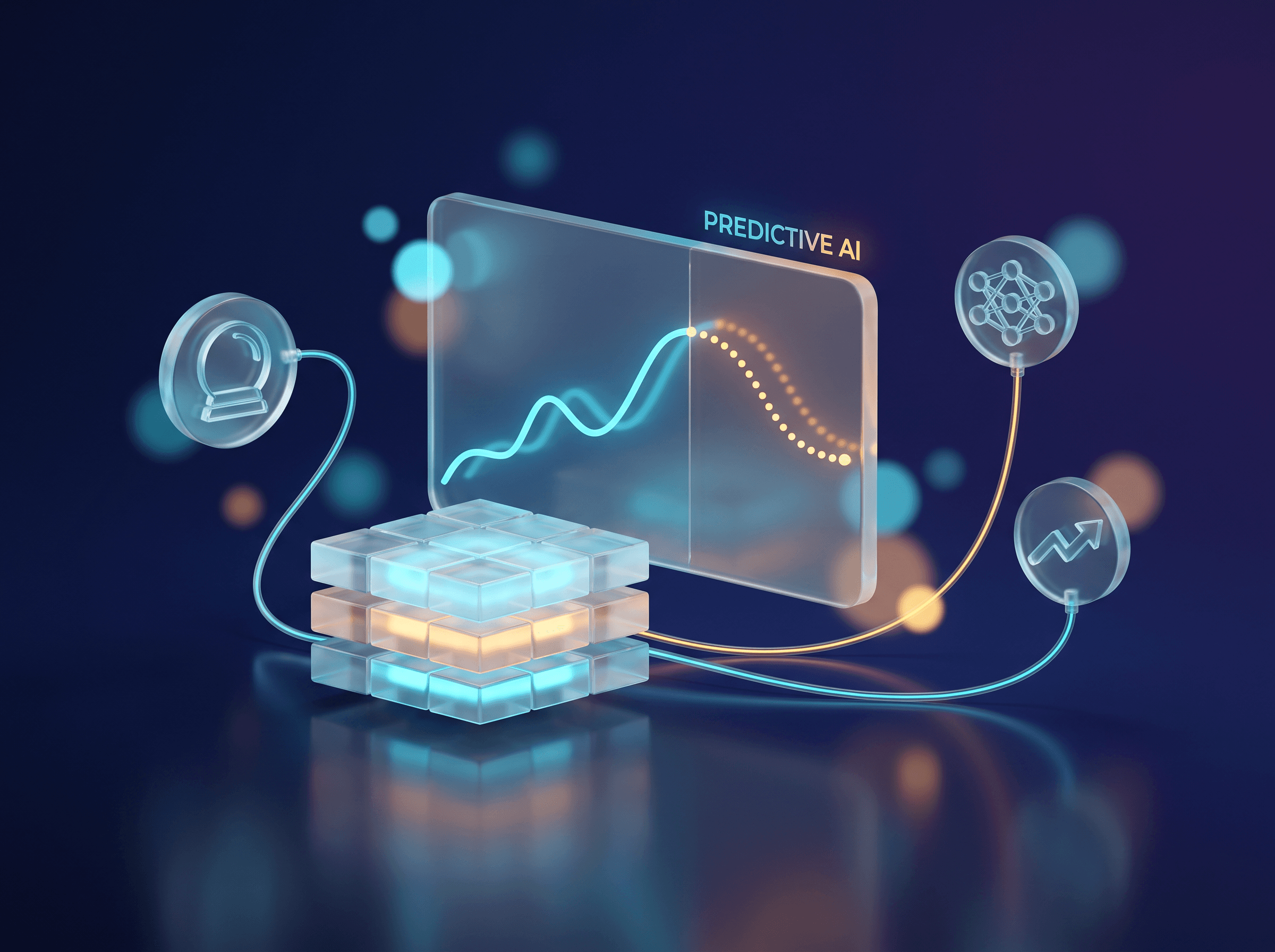
What is predictive AI?
Predictive AI is machine learning that learns patterns from past data and estimates what hasn’t happened yet: a probability, score, label or forecast. It flags fraud, scores credit, plans demand and, since July 2025, runs daily inside ECMWF’s operational weather forecasts. This guide covers how an AI prediction gets made, where the published evidence says
Gemini 4 Carbon vs Claude Fable 5.2: Benchmarks, Pricing and Which Is Better
Claude Fable 5.2 is the stronger model and Gemini 4 Carbon is the cheaper one, and that split settles most of this comparison. As of November 10, 2026, the Claude Fable 5.2 vs Gemini 4 Carbon gap runs one way on benchmarks and the other on price: Fable leads six of the seven rows the
Gemini 4 Carbon Launch: Benchmarks, Pricing and Everything You Need to Know
Google opened Gemini 4 Carbon to all paying API developers on November 10, 2026, at $2 input and $10 output per million tokens. The Gemini 4 Carbon launch brings a model that leads 15 of 17 rows on its own scorecard but runs slow, spends tokens freely and doubles in price on December 1. This

What is AI code generation?
AI code generation is the use of machine-learning models, mostly large language models, to write source code from plain-language requests or existing code. It spans inline autocomplete, chat-based editing, and agents that edit files, run tests, and open pull requests. This guide explains how the models work, what the controlled studies actually measured, where generated
Stay Ahead of AI
One email per week with the AI engineering insights, agent builds, and tools that actually matter.
No spamUnsubscribe anytimeFree forever
- 01One agent build, taken apart step by step
- 02The tools that earned a place in our stack this week
- 03What broke in production, and what we changed
 Written by Ignas Vaitukaitis, founder of AlphaCorp AI.