

Hire TypeScript Developers
Senior TypeScript engineers, screened on the defects that actually reach production in 2026, for teams shipping AI-integrated products.
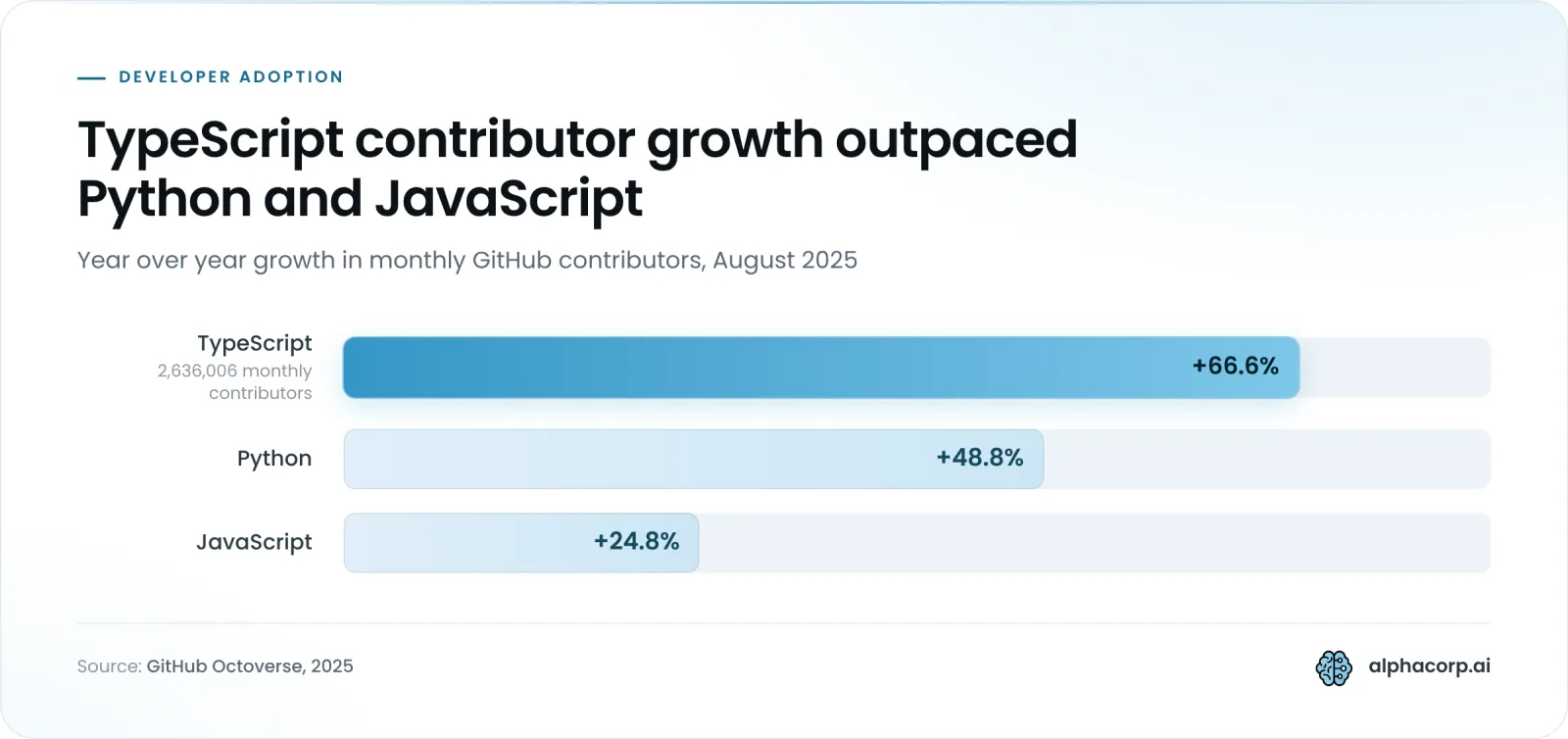
AlphaCorp AI helps engineering leaders hire TypeScript developers who can carry a production codebase: engineers screened through structured, criteria-based technical interviews covering the type system, build tooling, module resolution, and the TypeScript 7.0 native compiler, then embedded in your team or in an AlphaCorp AI delivery squad. The service is for CTOs and heads of engineering whose TypeScript screens still test annotation trivia while their real bugs come from configuration and API misuse. TypeScript is now the most-used language on GitHub, and the hiring bar has moved with it.

Creators of RustyRAG
Realtime RAG, built in Rust · Sub-200ms end-to-end 10+ years delivering AI solutionsIgnas Vaitukaitis · Founder & CEO
 VersarWashington, DC
 GynisusNew York
 CampusReelNew York
 LuniqGermany
 HospitalityFlowSingapore
The 2026 numbers behind TypeScript hiring demand
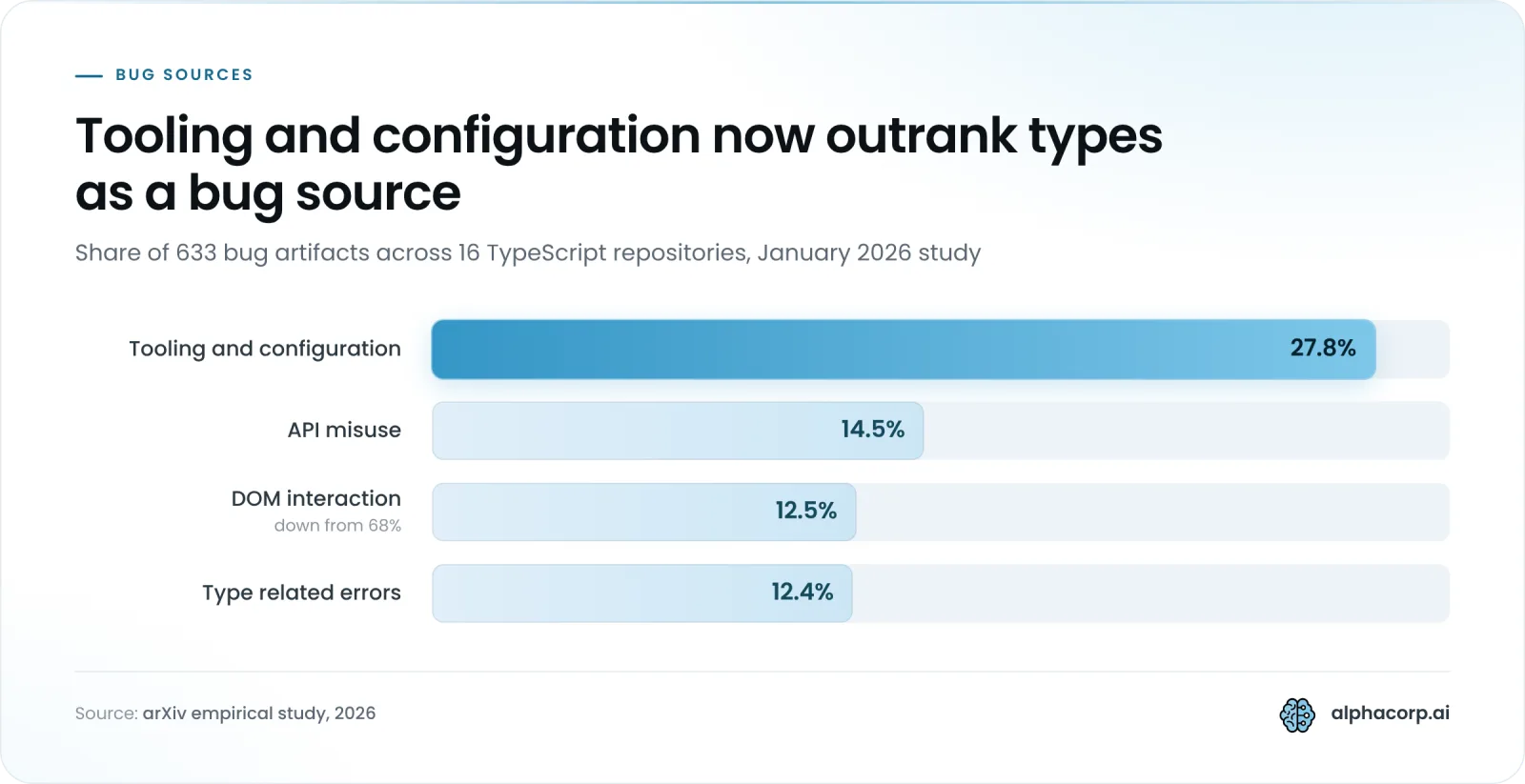
TypeScript demand is measured, and the measurements point the same direction. So does the evidence on where its bugs actually come from.
What our TypeScript hiring service covers
The service covers the screening, the placement, and the engineering work itself, because the people who interview your candidates are the people who build.
The Stack We Ship On
We pick the best tool for each job, not the trendiest. This is what runs behind the agents, retrieval pipelines and automation we put into production.
 AWS
AWS Azure
AzureHow a TypeScript hiring engagement runs
An engagement runs in five steps, and the technical screen is built from your codebase instead of from a question bank.
Why invest in TypeScript hiring in 2026
Hiring TypeScript developers in 2026 is an investment in code that AI tools and new frameworks already assume. Five mechanisms drive that.
Why AlphaCorp AI for TypeScript hiring
AlphaCorp AI screens TypeScript candidates on the bugs that ship in 2026 instead of the bugs that shipped in 2017, and it uses an interview format with published evidence behind it.
Structured interviews, because the evidence says so. Schmidt and Hunter's 1998 meta-analysis of 85 years of personnel-selection research found structured interviews carry an operational validity of .51 against .38 for unstructured ones. Every AlphaCorp AI screen is rubric-scored for that reason.
We test for type erosion. The pattern our engineers watch for is the one the January 2026 ecosystem study named: developers reaching for any and unsafe casts under deadline pressure. A candidate's response to a failing module-resolution setup tells us more than a generics puzzle does.
AI tools are part of the interview. A 2025 survey of industry professionals found most organizations have not adapted candidate evaluation to account for generative AI coding tools. AlphaCorp AI decides up front whether assistants are in or out for each round, and scores accordingly.
The honest limit of TypeScript itself. A 2022 comparison of 604 GitHub projects across 16 million lines of code found TypeScript projects had measurably better code quality, yet bug-proneness and resolution time were no better than JavaScript's. Hiring good TypeScript engineers changes that. Adopting the file extension does not.
The tradeoff, stated up front. If you need forty contractors by Monday, a volume staffing firm will serve you better. AlphaCorp AI places only engineers it has interviewed itself, and the team you meet is the team that builds.
How access to your code and data is handled
AlphaCorp AI engineers work inside your repositories, your accounts, and your access controls, with permissions you grant and can revoke. Code stays in your version control, and any AI assistant use during the engagement follows the policy you set for your own team.
Where the work grows past the front end, the same engineers carry it: Python development for the services behind the typed client, and AI agent development for the models those clients call.